Pregnancy & Antenatal CareFirst Trimester Pregnancy Care: A Practical Guide for Expecting Mothers
By Dr. Jyoti Gupta·14 Sept 2026·4 min read
Introduction
The first trimester — roughly the first 13 weeks of pregnancy — is when many of the biggest physical and emotional adjustments happen, often before pregnancy is even visible to others. This guide walks through what a typical first trimester involves, so you know what to expect from your care and when something needs attention sooner.
This complements our patient journey page, which walks through the broader path of care at The Blessed Womb — this article focuses specifically on the early weeks.
Key Takeaways
- Book your first antenatal consultation as soon as you know you're pregnant.
- Early investigations typically include blood tests, and an ultrasound when clinically appropriate.
- Common first-trimester symptoms (nausea, fatigue, breast tenderness) are usually normal, but some symptoms need urgent evaluation.
- Folic acid and other supplementation should be discussed with your doctor rather than self-prescribed.
- Vaccination during pregnancy follows current medical recommendations — your doctor will advise what's appropriate and when.
Your First Antenatal Consultation
Your first visit is largely about building a complete picture of your health. Expect your doctor to ask about:
- Your last menstrual period and cycle regularity, to help estimate your due date
- Any previous pregnancies, and how they went
- Your general medical history, including any ongoing conditions or medications
- Family history relevant to pregnancy
- Any symptoms you've noticed so far
This is also the right time to raise any concerns or questions — there's no such thing as a question too small during your first visit.
Common Investigations in Early Pregnancy
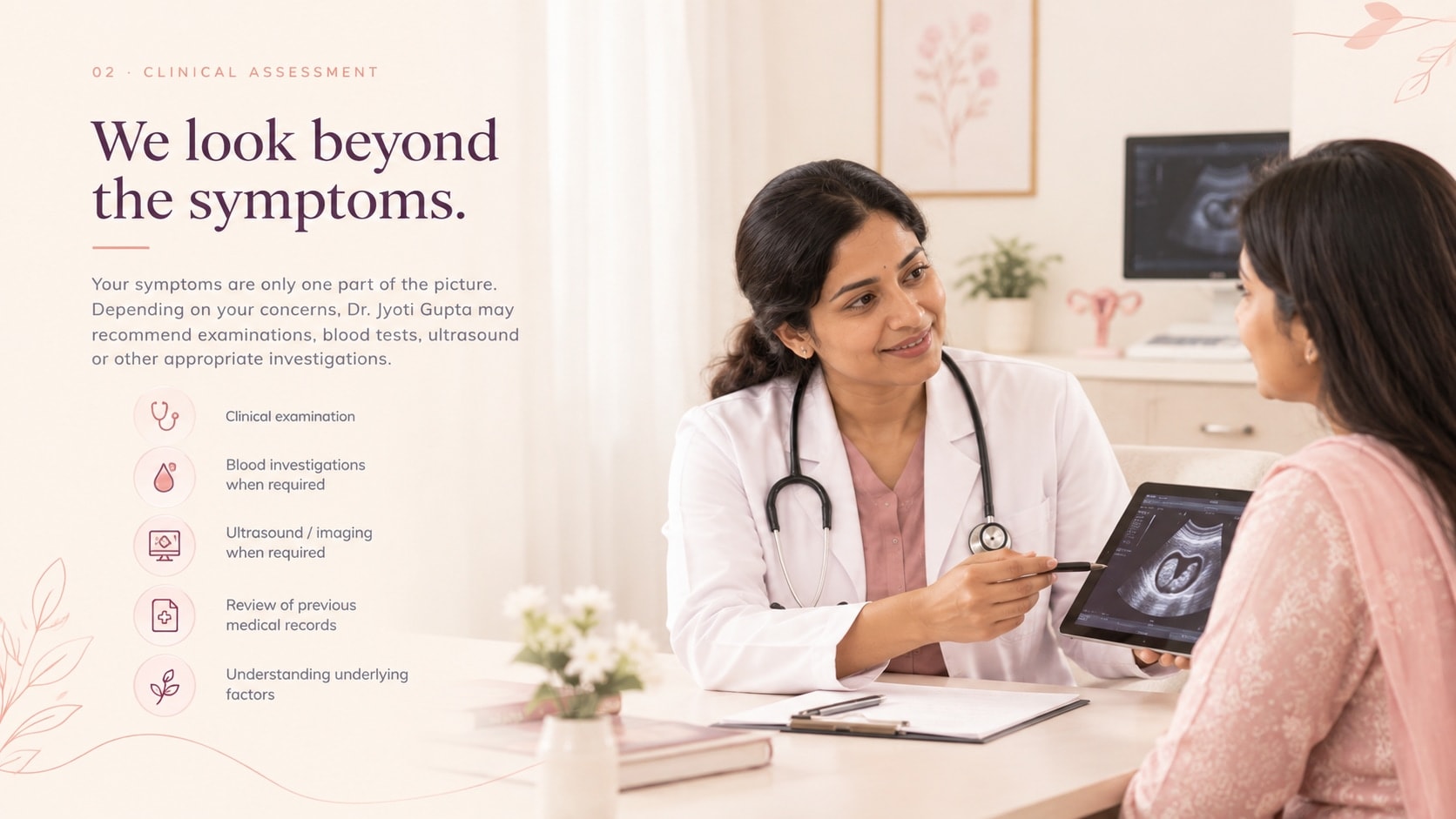
Depending on your individual history and what's clinically appropriate, your doctor may recommend:
- Blood tests — to check general health markers relevant to pregnancy.
- Pregnancy dating — establishing an accurate gestational age, often supported by ultrasound.
- Early ultrasound — timing depends on your specific circumstances (such as symptoms, cycle history, or prior pregnancy complications) rather than a single fixed week that applies to everyone. Your doctor will explain when it's appropriate in your case.
Not every test is needed for every pregnancy — your doctor tailors the plan to you.
Common (Usually Normal) First Trimester Symptoms
Most women experience some combination of:
- Nausea, with or without vomiting ("morning sickness," which can occur at any time of day)
- Fatigue
- Breast tenderness
- Frequent urination
- Mood changes
These are common and typically not cause for concern on their own. That said, if any symptom feels severe, persistent, or is affecting your ability to eat, drink, or function, mention it to your doctor rather than assuming it must be tolerated.
Warning Signs That Need Urgent Attention
Contact your doctor promptly, or seek urgent care, if you experience:
- Heavy vaginal bleeding (more than light spotting)
- Severe or persistent abdominal pain
- Fainting or severe dizziness
- High fever
- Severe, persistent vomiting that prevents you from keeping fluids down
Light spotting is relatively common in early pregnancy and is often not an emergency, but it should still be mentioned to your doctor rather than dismissed — they can advise whether it needs evaluation.
Nutrition, Supplementation and Medication Safety
Folic acid supplementation is a well-established part of early pregnancy care, but the right dose and timing for you should be confirmed with your doctor rather than self-determined, since individual needs vary. The same applies to any other supplement or medication — including over-the-counter medicines that felt routine before pregnancy. Always check with your doctor before starting or continuing any medication during pregnancy.
Vaccination in pregnancy is guided by current medical recommendations, which your doctor will discuss with you based on your individual health profile and local guidance.
Lifestyle Considerations
General wellbeing in early pregnancy is supported by adequate rest, staying hydrated, gentle activity as tolerated, and avoiding alcohol and smoking. Your doctor can give guidance specific to your situation, including any activities or exposures to be mindful of.
Follow-Up
Your doctor will let you know when to schedule your next visit based on your individual pregnancy — this is discussed further in our antenatal care guide, which covers the fuller journey through pregnancy checkups. If anything changes or concerns you before your next scheduled visit, you don't need to wait — reach out sooner.
Every pregnancy is different, and the timeline above is a general guide rather than a fixed schedule that applies identically to everyone.
Written & medically overseen byDr. Jyoti GuptaObstetrician & Gynaecologist · MBBS, Dip. GO, PGDUSThe Blessed Womb, Greater Noida
Medical information on this page is for educational purposes and should not replace individual medical consultation.